Tuesday, May 8, 2012

Jem and the Holograms: The Truly Outrageous Complete Series

Jem and the Holograms: The Truly Outrageous Complete Series

Jem and the Holograms: The Truly Outrageous Complete Series

Rate : | Price : $58.93 | Post Date : May 08, 2012 11:30:20
Usually ships in 24 hours

In 1985, the truly outrageous TV show, Jem and The Holograms, premiered to the delight of young girls and boys. This new animated series focused on the dual life of beautiful Jerrica Benton, co-owner of Starlight Music, and her pop star alter-ego, Jem, lead singer for the all-girl band Jem and The Holograms.

With its unique story line combination of drama, action, romance and music, Jem and The Holograms was a smash hit and became an icon for a decade. It's message of glamour, glitter, fashion and fame helped define a generation.

Now you can relive the adventures of Jem and The Holograms and their archrivals, The Misfits and The Stingers, in this first-ever complete collector's edition DVD box set. All 65 episodes of the hit series are included, accompanied by an exclusive bonus disc of brand-new and archival material rarely seen.

Disclaimer : This site/page does not included in any the parts with amazon.com but it is participant in the amazon services LLC associates program by advertising and linking to amazon.com , Certain content that appears on this site comes from amazon services LLC. This content is provided 'as is' and is subject to change or removal at any time.

Shopping Led Hurricane Lantern Cheep Diamondback 900sr Recumbent Bike

Wednesday, April 25, 2012

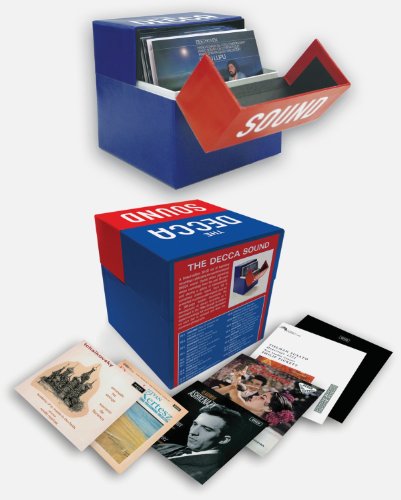
The Decca Sound

The Decca Sound

The Decca Sound

Brand :
Rate :
Price : $100.49
Post Date : Apr 25, 2012 22:48:07
Usually ships in 24 hours

The Decca Sound

A limited-edition 50-CD set of legendary recordings celebrating the world-renowned DECCA sound.

Classic-status pioneering stereo recordings from the past 55 years and starring a galaxy of internationally-acclaimed artistic talent. Each CD is presented in a sleeve with original cover art, along with a short review of the main work. Where an original release may have been of short duration due to limitations of the LP a bonus work featuring the same artists has been added. Also included is a 200-page booklet documenting the development of stereo recording as it developed in the 1950s through to modern digital recordings. Full recording information on each disc is included and there are numerous photographs. Truly a must-have collection for any audiophile.

Disclaimer : This site/page does not included in any the parts with amazon.com but it is participant in the amazon services LLC associates program by advertising and linking to amazon.com , Certain content that appears on this site comes from amazon services LLC. This content is provided 'as is' and is subject to change or removal at any time.

Viking Dual Fuel Range Immediately Murano Chandeliers Save You Money!

Tuesday, April 17, 2012

Grateful Dead: All the Years Combine: The DVD Collection (14-DVD Box Set)

Grateful Dead: All the Years Combine: The DVD Collection (14-DVD Box Set)

Grateful Dead: All the Years Combine: The DVD Collection (14-DVD Box Set)
Brand : | Rate : | Price : $108.99
Post Date : Apr 17, 2012 11:38:19 | Usually ships in 24 hours

Grateful Dead: All the Years Combine: The DVD Collection (14-DVD Box Set)

Shout! Factory celebrates Grateful Dead with the release of the 14-DVD box set All The Years Combine: The DVD Collection, which contains nearly 38 hours of concert
performances from the '70s to the '90s. Contains all bonus features from previous releases, the DVD debut of So Far, and an exclusive disc containing five previously unreleased Dead performances,the 1992 documentary Backstage Pass, and a new interview with Dead archivist David Lemieux. Also includes a 40 page book with rare photos and detailed essay and notes by Dead expert Blair Jackson.

The Grateful Dead Movie (2-DVD) (Theatrical film, originally released in 1977)

The Closing Of Winterland (2-DVD) (Winterland Ballroom, San Francisco, CA, December 31, 1978)

Dead Ahead (Radio City Music Hall, New York, NY, October 1980)

So Far (Originally released on VHS and laser disc in 1987 first time on DVD!)

Ticket To New Year's*(Oakland Coliseum, Oakland, CA, December 31, 1987)

Truckin' Up To Buffalo (Rich Stadium, Orchard Park, NY, on July 4, 1989)

Downhill From Here (Alpine Valley Music Theatre, East Troy, WI, July 17, 1989)

View From The Vault (Three Rivers Stadium, Pittsburgh, PA, July 8, 1990)

View From The Vault II (RFK Stadium, Washington, DC, June 14, 1991)

View From The Vault III (Shoreline Amphitheatre, Mountain View, CA, June 16, 1990)

View From The Vault IV (Oakland Stadium, Oakland, CA, July 24, 1987, and Anaheim Stadium, Anaheim, CA, July 26, 1987)

Bonus Disc:
Wrapping up the box set is an exclusive bonus disc containing five previously unreleased and never before seen live performances from 1987-1991, sourced from the Grateful Dead archive, as well as Backstage Pass, the 1992 documentary directed by Justin Kreutzmann, and a brand-new interview with Grateful Dead archivist David Lemieux.

More Specification..!!

Disclaimer : This site/page does not included in any the parts with amazon.com but it is participant in the amazon services LLC associates program by advertising and linking to amazon.com , Certain content that appears on this site comes from amazon services LLC. This content is provided 'as is' and is subject to change or removal at any time.

Ukf7003axx Puriclean Best Quality Where To Buy Toy Chainsaws

Monday, April 2, 2012

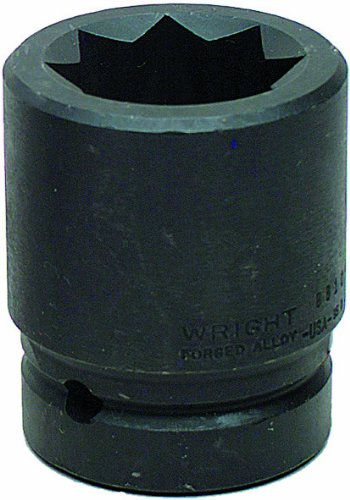
Wright Tool 8810 1-3/16-Inch with 1-Inch Drive 8 Point Double Square Impact Railroad Sockets

Cheap! Wright Tool 8810 1-3/16-Inch with 1-Inch Drive 8 Point Double Square Impact Railroad Sockets

Wright Tool 8810 1-3/16-Inch with 1-Inch Drive 8 Point Double Square Impact Railroad Sockets - The Best Choice

Wright Tool 8810 1-3/16-Inch with 1-Inch Drive 8 Point Double Square Impact Railroad Sockets

  • Size 1 3/16-Inch weight 1.72
  • Nominal size 1 3/16-Inch shape III
  • Length 2 11/16-Inch diameter socket 2-1/4-Inch
  • Diameter drive 2 3/32-Inch broach depth 1 31/64-Inch
  • Ret ring 6581A

Wright Tool 8810 1-3/16-Inch with 1-Inch Drive 8 Point Double Square Impact Railroad Sockets

Wright Tool 8810 1-3/16-Inch with 1-Inch Drive 8 Point Double Square Impact Railroad Sockets

( Product Infomation Posted On Time : Apr 02, 2012 03:48:52 View Last Update Infomation At Amazon)

Disclaimer : This site/page does not included in any the parts with amazon.com but it is participant in the amazon services LLC associates program by advertising and linking to amazon.com , Certain content that appears on this site comes from amazon services LLC. This content is provided 'as is' and is subject to change or removal at any time.

Sunday, March 18, 2012

Tumbleweed Babies 1114023 Its A Girl Baby Cake 3 Tier

Tumbleweed Babies 1114023 Its A Girl Baby Cake 3 Tier

Tumbleweed Babies 1114023 Its A Girl Baby Cake 3 Tier

Rate : | Price : | Post Date : Mar 18, 2012 03:49:13
N/A

Celebrate the arrival of the new baby girl with this sweet diaper cake!. Our "It's A Girl" diaper cake is a beautiful and practical baby gift new parents will love to receive! The creamy soft teddy bear features an embroidered face, pretty bow and a pink felt sign that proudly proclaims "It's A Girl"! A great baby shower gift and/or centerpiece all-in-one!. 35 brand name disposable diapers. Soft teddy bear holding a "It's A Girl" felt sign. Cute ribbons. Arrives beautifully wrapped in crisp, clear cellophane. A Diaper Cake "Recipe Card", detailing the cake ingredients and a gift card is also included. The entire diaper cake is carefully made so each diaper is fully functional, usable and clean. Measurements: 8"dia x 12"h (wrapped height is 16")

Disclaimer : This site/page does not included in any the parts with amazon.com but it is participant in the amazon services LLC associates program by advertising and linking to amazon.com , Certain content that appears on this site comes from amazon services LLC. This content is provided 'as is' and is subject to change or removal at any time.

Saturday, March 10, 2012

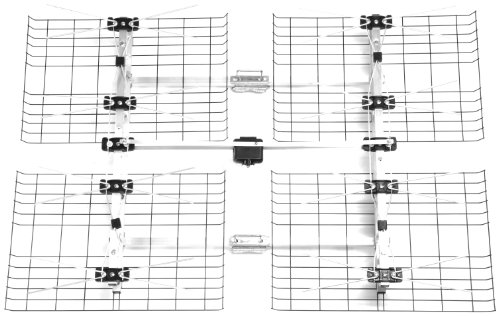
Antennas Direct DB8 Multidirectional HDTV Antenna

!±8± Antennas Direct DB8 Multidirectional HDTV Antenna

Brand : Antennas Direct | Rate : | Price : $69.99
Post Date : Mar 10, 2012 12:42:18 | Usually ships in 24 hours


Intended for people at great distances from the transmitters, the DB8 is one of the most powerful multidirectional HD antennas. In fact, its 15.8 dB gain make it one of the most powerful multidirectional antennas available, with a range of up to 70 miles or more. Its high gain, flexible aiming characteristics, and weatherproof construction make it an excellent choice for outdoor applications, particularly in more remote areas. The bowtie design of the DB8 uses triangular elements instead of rods to greatly increase the bandwidth, allowing it to cover the entire UHF band.

More Specification..!!

Good Bon Jovi Tee Shirts Insinkerator 5-75 For Sale

Thursday, March 1, 2012

Discovery Box Set: The Complete Studio Recordings

!±8± Discovery Box Set: The Complete Studio Recordings

Brand : | Rate : | Price : $159.58
Post Date : Mar 01, 2012 17:45:19 | Usually ships in 24 hours


Since 1967 Pink Floyd have produced one of the most outstanding and enduring catalogues in the history of recorded music. All 14 original Studio albums have now been painstakingly digitally remastered by James Guthrie (co-producer of The Wall), and are reissued with newly crafted packaging and booklets created by the band’s long-time artwork collaborator Storm Thorgerson.

‘Discovery’ albums are designed as an introduction to the artist, with all booklets including full album lyrics.  All 14 newly remastered Discovery studio albums are now available as a boxset collection that also includes an exclusive 60-page artwork booklet designed by Storm Thorgerson.


Contains the following 14 remastered studio Discovery albums:

The Piper At The Gates Of Dawn

A Saucerful Of Secrets

More

Ummagumma  

Atom Heart Mother

Meddle  

Obscured By Clouds 

The Dark Side Of The Moon  

Wish You Were Here 

Animals 

The Wall

The Final Cut

A Momentary Lapse Of Reason

The Division Bell

More Specification..!!

Home Theatre Systems Bose Quick Battle Field Bad Company Cheats Discount

Thursday, February 16, 2012

Mercury Living Presence Boxed Set

!±8± Mercury Living Presence Boxed Set

Brand : | Rate : | Price : $100.10
Post Date : Feb 16, 2012 16:08:34 | Not yet released


The Collector s Edition
Celebrating a groundbreaking label
51CD BOX SET the true legacy of a legendary label

Long hailed as an audiophile s label, Mercury represents an important milestone in the history of classical recordings

As The New York Times described, "One feels oneself in the living presence of the orchestra"

60 years after the landmark first recording, Mercury Living Presence: The Collector s Edition celebrates this special anniversary

Elegantly packaged, and following the highly successful format of The Decca Sound, this box set presents 50 original albums that have won accolades, and features such celebrated artists as Antal Dorati, Rafael Kubelik, Gina Bachauer, Byron Janis, Janos Starker, and Henryk Szeryng

The bonus disc contains a rare interview with Mercury legendary producer Wilma Cozart Fine

Mercury Living Presence is special in many ways - an American company, from the heyday of classical recording in the U.S., that reproduced some of the most sonically realistic recordings at the dawn of the stereo era. Precious few stereo LPs were pressed when these recordings were issued, and they became some of the rarest, most collectible classical discs ever. Mercury Living Presence continues to enjoy a special reputation as one of the most enterprising, prestigious and sonically-spectacular labels in the history of classical recording.

Some of these recording have been available on CD and on SACD. However, many are now deleted and only available 2nd-hand or through auction sellers at pemium prices. This 50-album Box Set (plus bonus interview CD with Wilma Cozart Fine, Mercury s producer) affords collectors an opportunity to acquire 50 classic recordings at a terrific price, in a box which may well become collectible itself.

More Specification..!!

Fans And Blowers Order Now Single Surge Suppressor Free Shipping Chef Supply Store Quick

Tuesday, December 27, 2011

The Boeing 737-300

!±8± The Boeing 737-300

I

Seeking to complete its family of quad-engined, long-range 707s and tri-engined, medium-range 727s with a twin-engined, short-range airliner, and capture some of the market already filled by the similarly-configured SE.210 Caravelle, BAC-111, and DC-9, Boeing had designed a low-wing aircraft which had deviated from these competing designs by using the same fuselage cross-section as its larger counterparts', retaining their six-abreast coach seating and attaching its engines to the wing underside, obviating the need for the t-tail. That aircraft had been designated "737."

Intended for the same short-sector, high-frequency routes as these other twinjets, it employed a wing short enough to reduce drag, structure weight, and direct operating costs, yet long enough to house the fuel capacity required for its intended sector lengths. Because these had been envisioned as relatively short, high cruise speeds had been less pivotal to the design than those of its long-range models. Although the wing-attached engines had resulted in some degree of lift loss compared to the now-standard, aft, fuselage-mounted powerplant configuration of the other twins, Boeing had been able to counteract this tendency with both leading and trailing edge high-lift devices on the wing.

Citing the design's commonality with its other Boeing types, and conceding that its existing 727s had offered excess capacity, particularly on internal German routes, Lufthansa had become the launch customer for the 737 in its initial version as the 737-100 when it had placed an order for 21 on February 19, 1965.

First flying in prototype form two years later, on April 9, and registered N73700, it had entered scheduled service on February 10, 1968, powered by two 14,000 thrust-pound Pratt and Whitney JT8D-7 engines and able to accommodate up to 103 single-class passengers. A slightly stretched version, the 737-200, had been launched with an order for 40 from United Airlines, and had first flown on August 8, 1967. The elongated version, with longer engine nacelles, had a maximum capacity of 130 and entered service the following year on April 28.

Despite a meager production run of only 30 for the former, the latter, particularly in its later "Advanced" guise, had achieved an impressive 1,114 sales, having earned it the title of world's "fasted selling" twinjet.

In order to incorporate evolving technology, improve performance, and reduce operating costs, Boeing offered yet a third basic version, the type's first significant upgrade and second passenger capacity increase.

Integral to both had been the new-technology, high bypass ratio turbofan which had offered greater thrust, lower fuel consumption, and reduced noise, eliminating the need for a costly redesign of the existing wing and hence restricting the development program's costs to the 0 million level. Unlike the narrower JT8D engine, however, the new turbofan featured a larger diameter and could no longer be directly attached to the wing underside, requiring, instead, attachment by means of a pylon, a configuration which left inadequate ground clearance without an equally costly main undercarriage strut lengthening and redesign.

Only close cooperation between Boeing and CFM International, intended engine manufacturer, could result in a co-solution to the engineering obstacles. The engine itself, the CFM56, had first run in June of 1974 after a considerable development period and had first become airborne on a McDonnell-Douglas YC-15, later also doing so in France mounted to a Caravelle. Retrofitted to the Super DC-8 as the CFM56-2, at which time the aircraft had been redesignated the DC-8-70 series, it had produced 24,000 pounds of thrust. At reduced rating, as the CFM56-3, it had been targeted at the new 737 version.

Relocating the ancillary equipment ordinarily installed in an engine's top and bottom portions, CFM International had redimensioned it to one of oval shape with an almost flat underside, reducing its diameter and therefore increasing its ground clearance, while Boeing had pylon-mounted it at a slight angle in order to avoid wing underside and trailing edge heat and exhaust interference. The configuration, which had placed most of the turbofan ahead of the leading edge and had resulted in downwardly canted thrust efflux, had liberated previously unusable wing volume for increased fuel tankage, indirectly increasing the aircraft's range. Coupled with a lengthened, repositioned nose gear strut, the arrangement had produced a 28-inch engine-to-ground clearance, which had been only two inches shorter than the 30 provided by the much narrower JT8D nacelle.

In order to counter the additional weight exerted on approach speeds, a new leading edge slat, running between the engine pylon and the wing tip and featuring double the area of the precedent 737-200's, increased the chord by four percent, permitting an approach speed which had been only five knots higher than that of the earlier version and raising its altitude capability by 4,000 feet.

Program launch, on March 5, 1981, preceded actual first orders, by USAir and Southwest Airlines, by three weeks. The first roll-out, occurring three years later, on January 17, 1984, in Renton, Washington, of the prototype, which, for the second time, bore the N73700 registration originally assigned to the 737-100, initially took to the skies the following month, on February 24, attaining a 29,000-foot altitude and completing a successful two-hour, 56-minute maiden flight. FAA type certification, following a three-aircraft, 1,294-hour flight test program, had been attained on November 14 for an aircraft which had not only met new stringent noise level regulations, but had demonstrated greater performance and economy than calculated during its design phase.

The third basic version of the 737 family, designated 737-300, featured a fail-safe aluminum fuselage with a nominal, 8.8-foot extension over that of the 737-200, comprised of 3.8 feet ahead of the wing and five feet along its trailing edge, and resulting in a 109.7-foot overall length and a modest, 19-passenger capacity increase.

The cabin, incorporating larger, redesigned overhead storage compartments and revised lighting, standardly accommodates eight first class, two-two arranged seats at a 36-inch pitch and 120 economy class, three-three arranged seats at a 32-inch pitch. A maximum of 149, single-class, exit-limited passengers can alternatively be accommodated in a single-class configuration at a 32-inch seat pitch. Underfloor baggage, cargo, and mail holds are located forward and aft of the wing.

Cockpit commonality with the earlier 737 versions had been deliberately retained in order to facilitate a common type rating.

The aluminum alloy, two-spar wing, with a 94.9-foot span, features 11-inch tip extensions, a 4.4-percent leading edge extension and a lateral control spoiler panel outboard of the engines, and a new flap section and track fairing aft of them. Low-speed, high-lift devices include inboard, leading edge Krueger flaps; outboard, three-section, leading edge slats; and trailing edge, triple-slotted flaps. Three outboard, powered, overwing spoiler panels, of aluminum honeycomb, augment lateral control and act as inflight airbrakes and ground-based spoilers, while graphite composite ailerons provide roll control. Wing and fuselage center section tanks house 5,311 US gallons of fuel.

A variable incidence tailplane, whose span is greater than that of the earlier 737-200, is activated by two electric motors, with manual standby reversion capability, while the vertical tail introduced a dorsal fin atop the fuselage in order to counteract engine loss-created asymmetric thrust conditions.

All surfaces are hydraulically actuated and operate off of two independent systems.

The equally, hydraulically retractable and extendible, dual-wheeled, tricycle undercarriage is devoid of wheel well doors on its main units, their wheels forming aerodynamic seals in the stored position. The design decreases weight and fosters simplicity of operation and ease of maintenance access.

Power is provided by two thrust-reverser equipped CFM International CFM56-3C-1 turbofans, each rated at 20,000 pounds of thrust.

The basic gross weight variant, at a 124,500-pound take off weight, features a 1,625-mile range, while the high gross weight option, at 138,500 pounds, produces a 2,260-mile range.

II

A representative round-trip flight, from New York/La Guardia to Chicago/O'Hare with United Airlines, illustrates the typical two-hour sectors for which the 737-300 had been designed.

After some two hours of taxiing parallel to both the active (13-31) and the nonactive (4-22) runway at La Guardia Airport amid 50 other aircraft, most of which awaited westbound air traffic control clearances through the weather-obstacled Cleveland Center corridor, the United Airlines 737-300 followed a US Airways Express DHC-8-100 on to Runway 13, conducting its acceleration roll and rotating. Instructed to "contact departure," Flight 695 maneuvered into a tight left bank over Flushing Bay and the East River, as the Throgs Neck and Whitestone Bridges, draped in white light necklaces, passed below and beyond the left wing.

Given successive altitude clearances, from 5,000 through 9,000, 10,000, and 15,000 feet, the aircraft banked to a 320-degree heading, contacting New York Center on 132.6, and was cleared to its first VOR at a "climb and maintain" flight level of 230. After a 280-knot speed restriction, the 737 had been cleared to 36,000 feet and contacted Cleveland Center. A full orange moon, hovering above the left wing tip, faintly illuminated the thick cumulonimbus cloud deck below.

Speed brakes permitted rapid, initial descent 70 miles from O'Hare International Airport. Plying the moon-illuminated, silver skies, the aircraft briefly raced across the fluffy cumulous tops before plunging into them at 10,000 feet. United 695 contacted Chicago Approach Control.

The moon, periodically visible through the broken cloud deck, transformed the sky into a silver-and-black Halloween-scape on the other side of midnight. Instructed to "descend and maintain 6,000," the 737 momentarily turned left to 200 degrees before almost immediately banking right to a heading of 220. Maintaining 4,000 feet to the ADAM VOR, United 695 intercepted the ILS to Runway 27L, subsequently contacting the Chicago tower and completing its undercarriage and flap extension sequencing.

The orange geometric pattern of ground lights appeared through the mist as the aircraft commenced its flap and undercarriage sequencing. Applying partial power and maintaining a 135-knot approach speed, it passed over the blue-bordered taxiway patterns of the field and flared on to the runway during the wee hours of the morning.

Pushed back from Gate C31 amid a glowing copper dusk the following day on the return sector, the United Airlines 737-300, operating as Flight 690, commenced a lengthy taxi roll to the pad just short of runways 22L and 27L, where air traffic control restrictions necessitated its engine shut down for 30 minutes, before being granted take off clearance on the former of the two runways.

Contacting Chicago Departure Control and rolling into a tight left bank over the ground lights, the aircraft was instructed to "climb and maintain" 8,000 feet, cleared to its initial VOR. The orange, rectangular light geometries yielded to the black, referenceless surface of Lake Michigan. Angling from 10,800 to 13,000 feet, the 737 contacted Chicago Center on 126.47. Huge, moonlit cumulous mountains moved under the right wing as the aircraft was cleared to 35,000 feet.

Contacting Cleveland Center on 133.07, the aircraft rode "light chop" and was instructed to reduce speed to Mach.74 "for spacing." Contact with New York Center, on 128.57, subsequently followed. A published hold at the MILTON VOR, with a 0345 Zulu release time, had been canceled before reaching it, although the 737 reduced speed to minimize its then anticipated hold time upon reaching it.

Now cleared to La Guardia via Milton 3, the aircraft, maintaining 280 knots, was instructed to cross the Mark intersection at flight level 190, and then "descend and maintain" 10,000 feet and reduce speed to 250 knots. Contacting New York Approach on 127.43, Flight 690 was given the altimeter of "29.64" and requested to maintain a heading of 120 degrees and "reduce speed to 180 knots."

Instructed "direct to Green and intercept the localizer," the 737 was cleared for an ILS approach to Runway 04. The full moon, now visible through the thin, sheath-like clouds, assumed an apparitional profile.

Handed off to the tower, the aircraft was advised of "wind 090 at 5." Breaking free of the cloud cover, now with fully extended leading and trailing edge wing devices, it emerged above the ground lights of Jackson Heights, knifing through strong, slanting rain and rolling on its longitudinal axis as it counteracted winds.

Cleared to land, it passed over the black, reflective Grand Central Parkway, flaring on to the wet runway surface with a bounce before its raised spoilers firmly implanted it groundward.

III

When Boeing had rolled out its last, intermittently designated "Classic" 737, a 737-400, inRenton, Washington, it had achieved an impressive production milestone of having built 1,113 737-300s, 486 longer-fuselage 737-400s, and 389 shorter-fuselage 737-500s. In 1991, it had reached a peak of 21 aircraft completed each month. When these production figures include the 30 "First Generation" 737-100s and 1,114 737-200s, the 3,132 aircraft collectively produced had qualified the short-range, low-capacity twinjet as the world's best-selling commercial airliner. Usurped by the "Next Generation" 737-600, -700, -800, and -900, the basic design created to complete its family and compete with the then current twinjets, which had all since been removed from production, had achieved every goal its engineers had inceptionally set, as evidenced by the more than 6,000 airframes sold and the global coverage of their routes, which result in a take off or landing every few seconds, somewhere in the world, 24 hours per day.


The Boeing 737-300

Water Filters Direct Top Quality

Wednesday, December 7, 2011

IFLY 737NG AirBerlin Departure from EDDF (FRANKFURT MAIN)

As the title says! Please rate comment and subscribe :) Facebook -www.facebook.com ***BELOW ARE TAGS DO NOT READ*** c-5 galaxy FLIGHT SIMULATOR FSX 757 747 737 LAS ANGELES SAN DIEGO BOSTON INTERNATIONAL CROSSWIND LANDING Crosswind landing FS 2004 LANDING TAKEOFF LIGHTNING STORM SAN DIEGO LAS VEGAS SIMULATOR C123 FSX 757 747 737 SAN FRANCISCO JOSE OAKLAND INTERNATIONAL SIMULATOR LANDING AirSimmerA320 Aviation Courchevel edetroit The Dance of the Grumman Goose Hong Kong Intl Kai Tak IGS Rwy 13 FS9 FS2004 Flightsim edetroit Hong Kong Kai Tak IGS Rwy 13 Maddog MD-82 PMDG PMDG MD-11 MD-11 FSX PMDG MD-11 guide FSX Guide MD-11 Guide PMDG PMDG MD-11 MD-11 Juneau Juneau Alaska Juneau Airport PMDG 747 Startup Procedure Tutorial Part 1 Voiced PMDG 747 Startup Procedure Tutorial Part 2 Voiced fs9 fsx fs10 fs2004 fs flight sim simulator 2004 pmdg precision manuals development group md-11 mcdonnell douglas 11 boeing atlanta hartsfield international frankfurt germany united states ocean atlantic canada new york france egll heathrow fmc management computer systems full flaps gear throttle idle imagine aerosoft mega airport KLM Boeing 777-200ER At St. Maarten! TrackIR5 Flight Simulator 2004 FS9 FSX FranceVFR Sables d'Olonne Ceranado FlightOne Jet aiways paramount airways air india express 737-800 700 900 NG aerosoft airbus x mallorca x 737 cockpit hd night texture ge pro ultimate terrain eurioe realistic flight sim vs reality

Discounted Storkcraft Changing Table

Friday, November 25, 2011

Wednesday, November 16, 2011

PMDG Boeing 737NG Normal Procedures, Part 2 of 3

PMDG Boeing 737NG Normal Procedures, Part Two of Three. Based on real life normal procedures. Serves tutorial purposes. Covers full flight deck preparation in general, including: - establishing electrical power - starting the APU - setting up air conditioning and pressurization - setting up the EFIS Control Panel and the Radio Panel - setting up the Mode Control Panel - setting up the Flight Management Computer - accomplishing various system checks Also covers: - before start procedure - engine start procedure - pushback - after start procedure *** *** *** BOEING 737NG SYSTEMS, FLIGHT PATTERS AND SOME QUESTIONNAIRES AT www.smartcockpit.com *** *** *** Part three: www.youtube.com Part one: www.youtube.com

Frye Boots Paige Tall Riding Coupon Gerber Knife Warranty Clearance Sale Mens Electric Shaver Discount


Twitter Facebook Flickr RSS


Français Deutsch Italiano Português
Español 日本語 한국의 中国简体。


Sponsor Links